—Habitable Climes
The Sunderland Collection Art Programme, in partnership with Canada House, High Commission of Canada, London.
Habitable Climes is a body of work that charts how we perceive place and the way we try to impose logic and measures on the world. There is something incredibly human in trying to understand, falling short, and trying again.
It is an exhibition that responds to a history of human ingenuity and curiosity, an era of scientific innovation, mathematical prowess and cartographic evolution. It is a history of imposed borders, oversimplification and greed. It is a history of playful games of spinning globes and far off lands, of imagination and wanderlust. It is an exhibition of how we choose to see the world, its faults and wonder and their inherent co-existing contradictions.
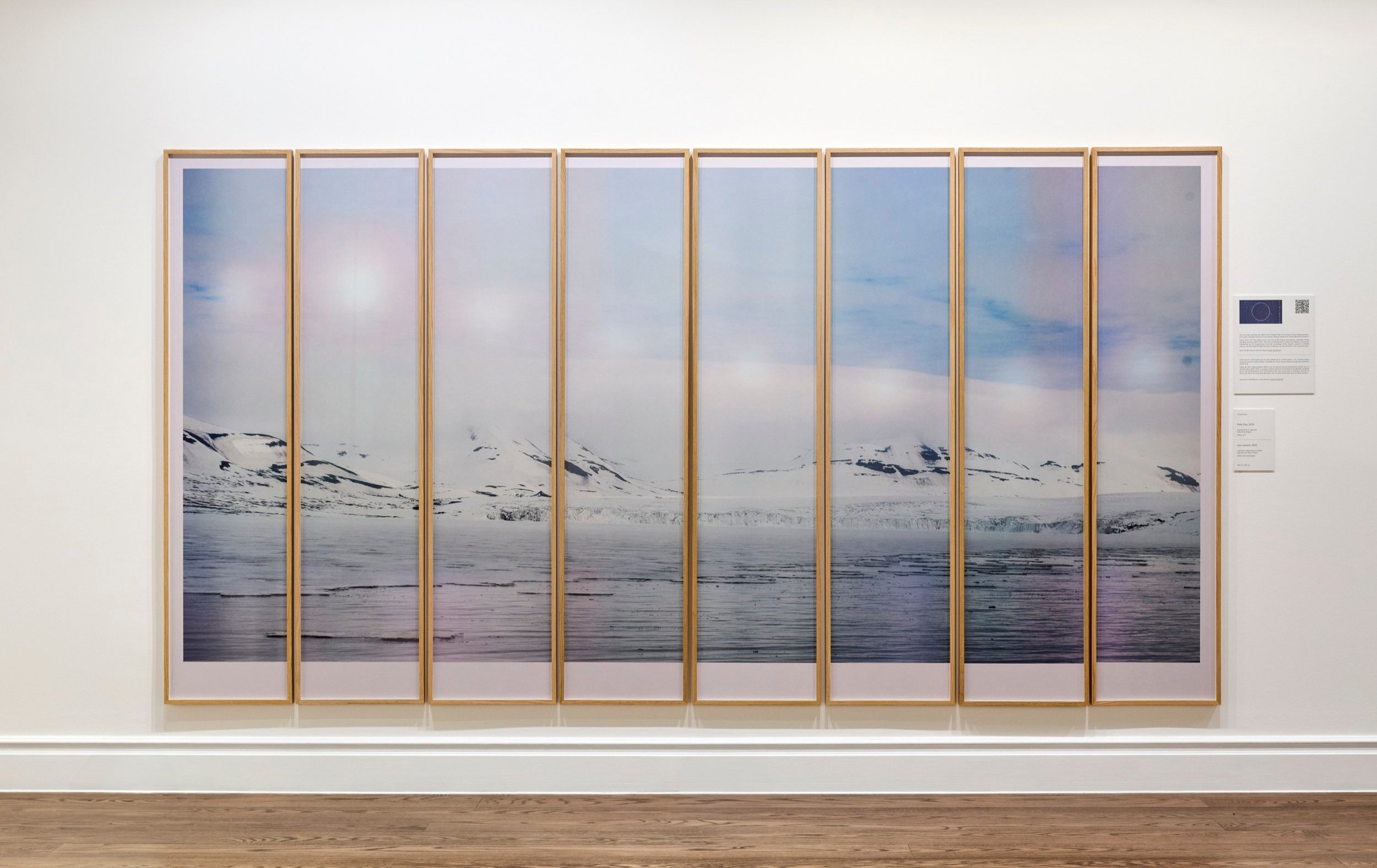
Maps do not only chart the earth, but the stars as well.
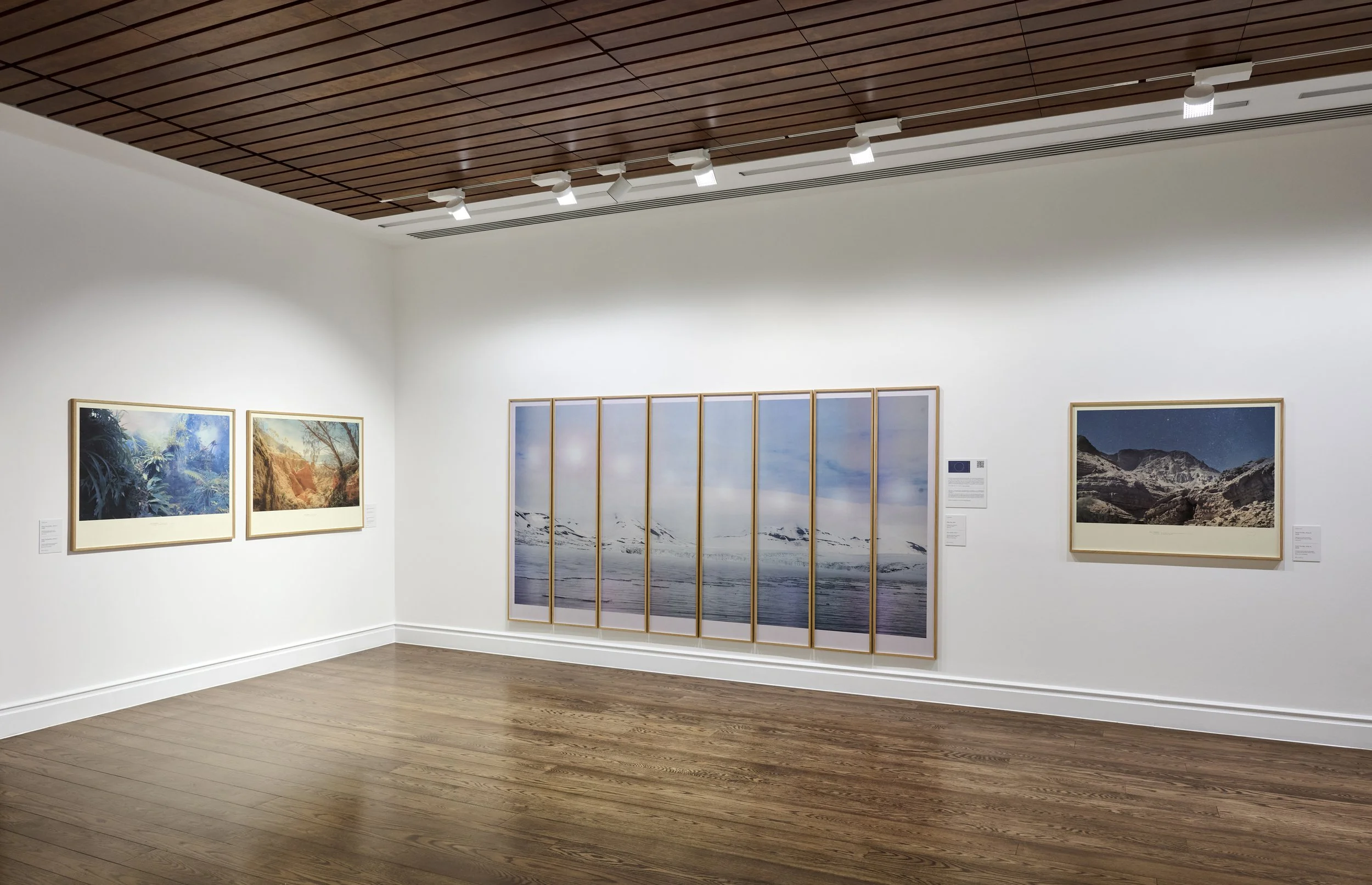
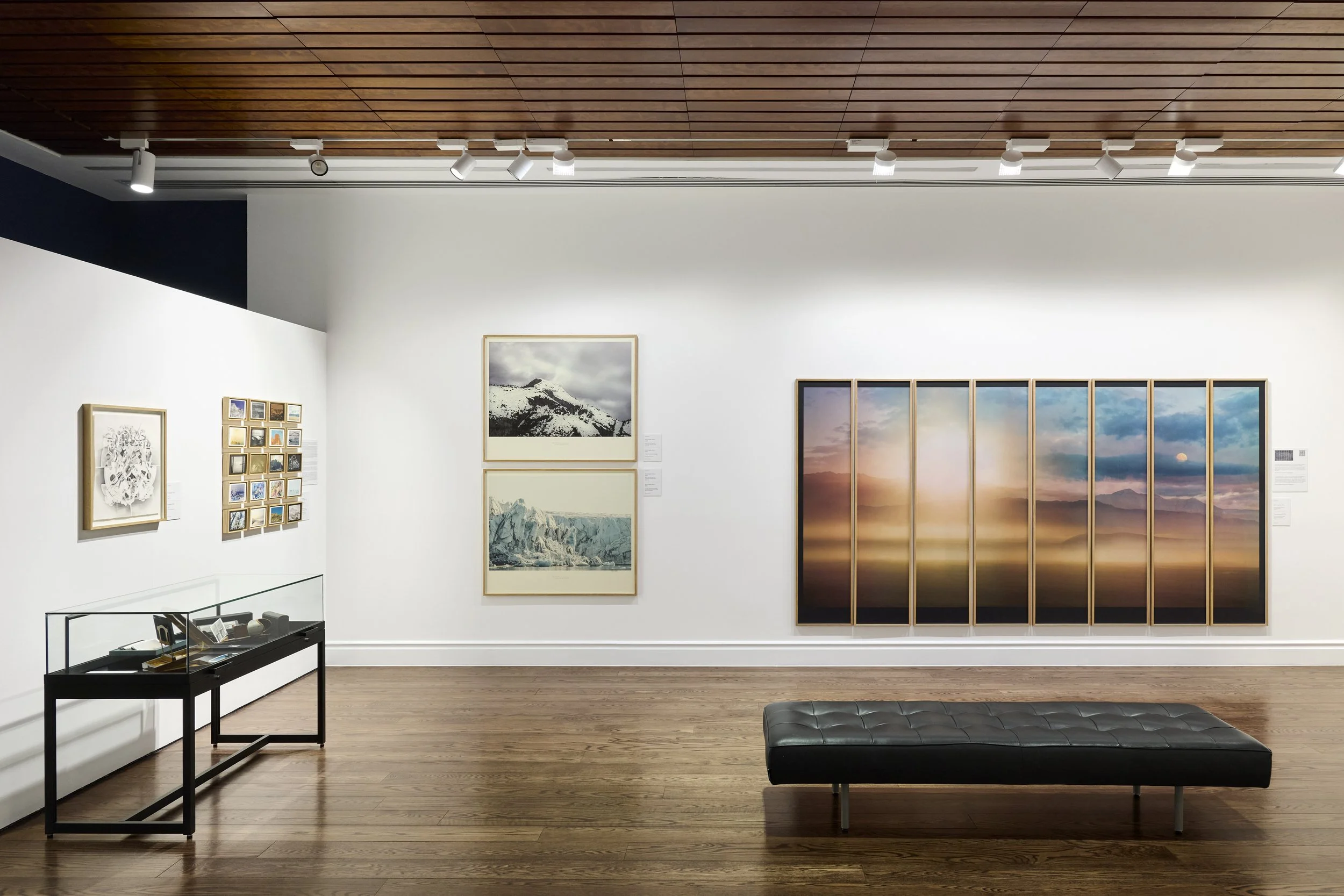
Drawing inspiration from the 19th century terrestrial and celestial “Blue China” Maps, I asked myself what presumptions I had had that since been upturned. This was the very idea of night and day. I wanted to create a work that reinterpreted these pieces through my experience in the Arctic, charting the midnight sun.
But in doing so, I had to ask myself, what is its anthesis? Polar Opposite, is taken from a desiccated lakebed in Nevada through multiple dust storms. Surrounded by earth, in a prehistoric lake, it felt both subterranean and alien.
Polar Day, 2025
pigment print on Japanese Kozo, edition of 3, 180 x 360 cm, edition of 3
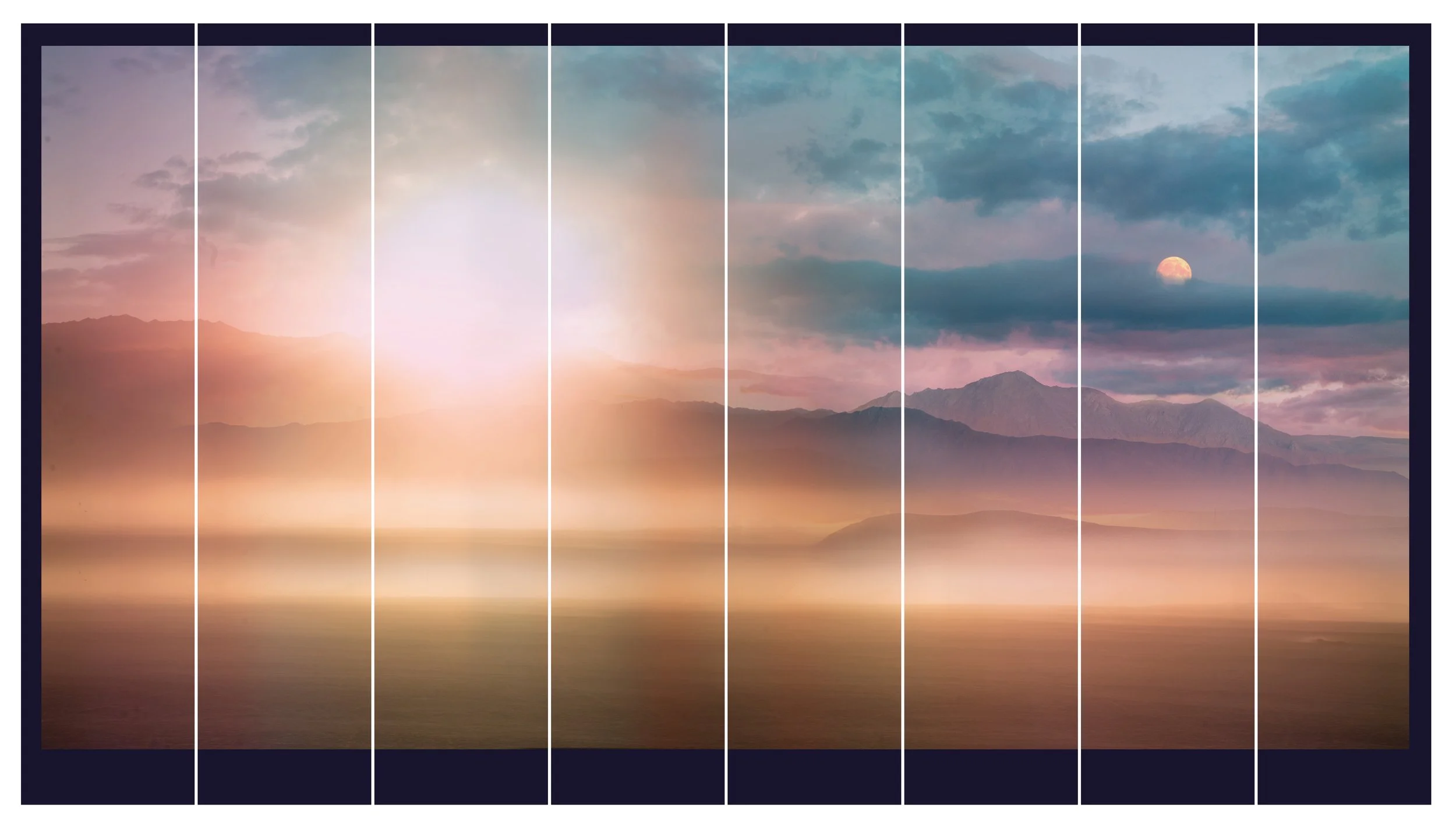
Polar Opposite, 2025
pigment print on Japanese Kozo, edition of 3, 180 x 360 cm, edition of 3

How do we find our way? Can we reduce the world to a series of degrees and parallels?
The idea of how we place ourselves in space can be answered a hundred difference ways. My heritage is not my nationality, but one informs the other. I grew up on stories of people and places I’d never known, but felt deeply connected to. The places described are from memories. They don’t exist now as they did. Does that mean this connection is to a ghost, or just a language by which orientate ourselves?
Impossible Measures, a series of 16 etchings, that looks at the obfuscation of direction through the photographing of navigational silhouettes. This obfuscation is from time, as knowledge is gained and lost repeatedly. Inspired by the Royal Geographical Society’s collection, these etchings feature artefacts such as Livingstone and Darwin’s pocket sextants, and Gertrude Bell’s theodolite.
Impossible Measures, 2025
Series of 16 etchings on Somerset White Satin, edition of 10.
These remarkable objects delineated the world. Aristotle first separated the world into 5 zones, called Habitable Climes, from which this exhibition gains its name. These zones stratified the world, into frigid, temperate and torrid climates in which were and were not habitable. As time passes, zones were added and eventually became the parallels we know today.
There are far more latitudes today. The world has grown too. But the margins by where we deem habitable is a variable that cannot be ignored. This a latitude as well, one which we afford ourselves.
As an artist-photographer and printmaker, I am fascinated by the evolving, shifting perspectives found within the intersecting narratives of climate, histories, and how print and photography hold an inherent place within that history, its dissemination and democratisation.
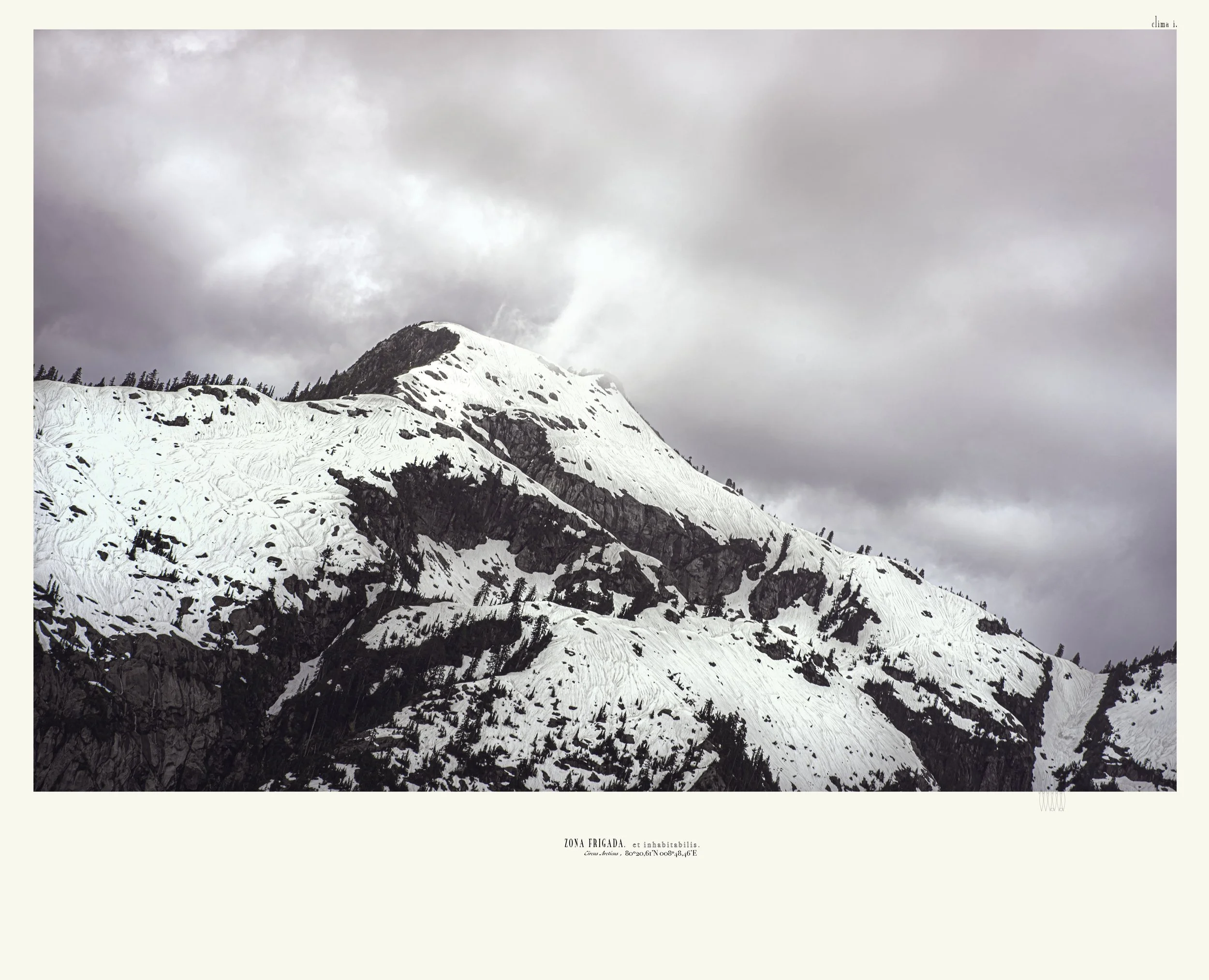
Zona Frigida, clima i
left pigment print on Japanese Kozo with gold screenprint detailing, edition of 5, 2025.

Zona Temperata, clima ii
pigment print on Japanese Kozo with gold screenprint detailing, edition of 5, 2025.
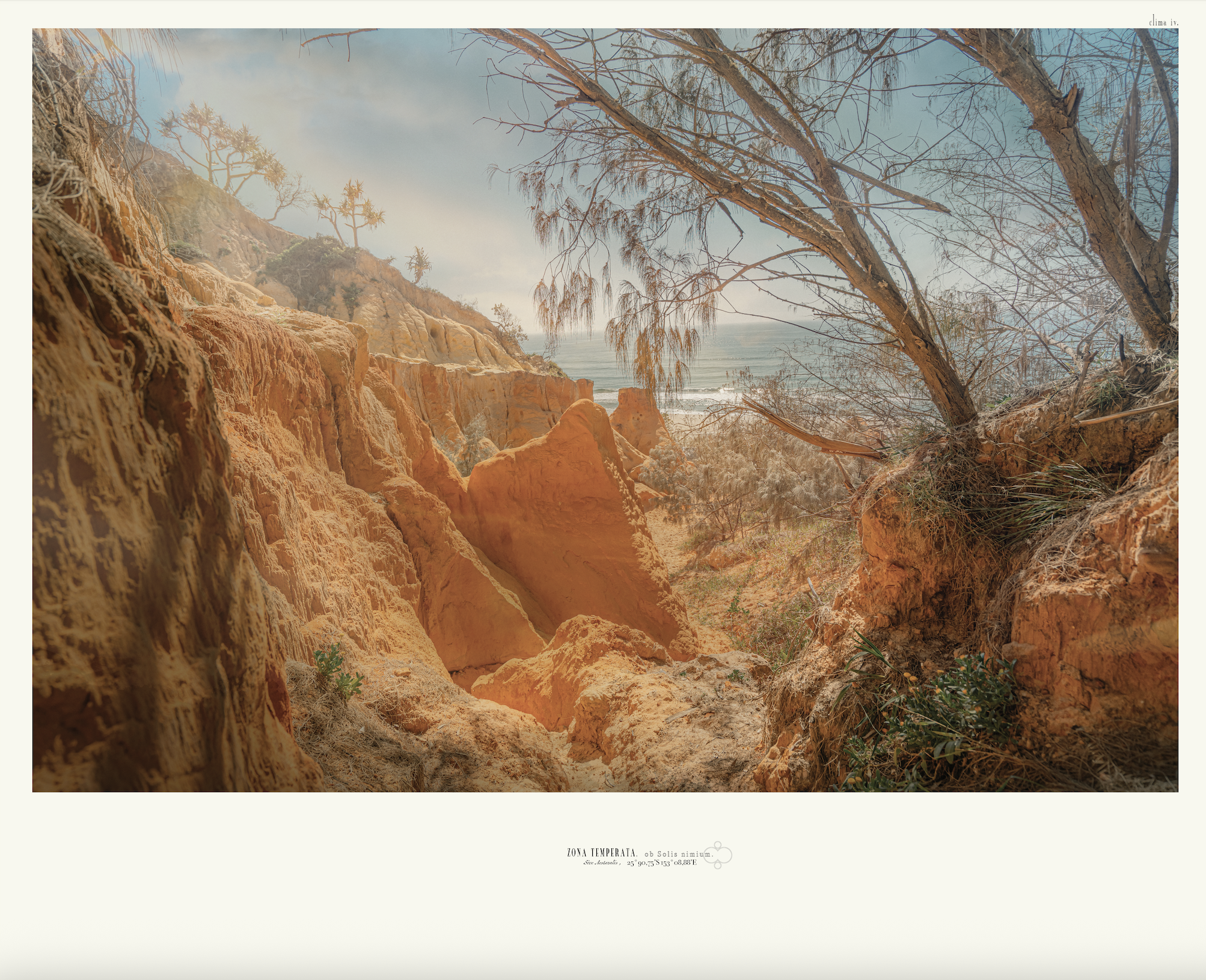
Zona Temperata, clima iv
pigment print on Japanese Kozo with gold screenprint detailing, edition of 5, 2025.
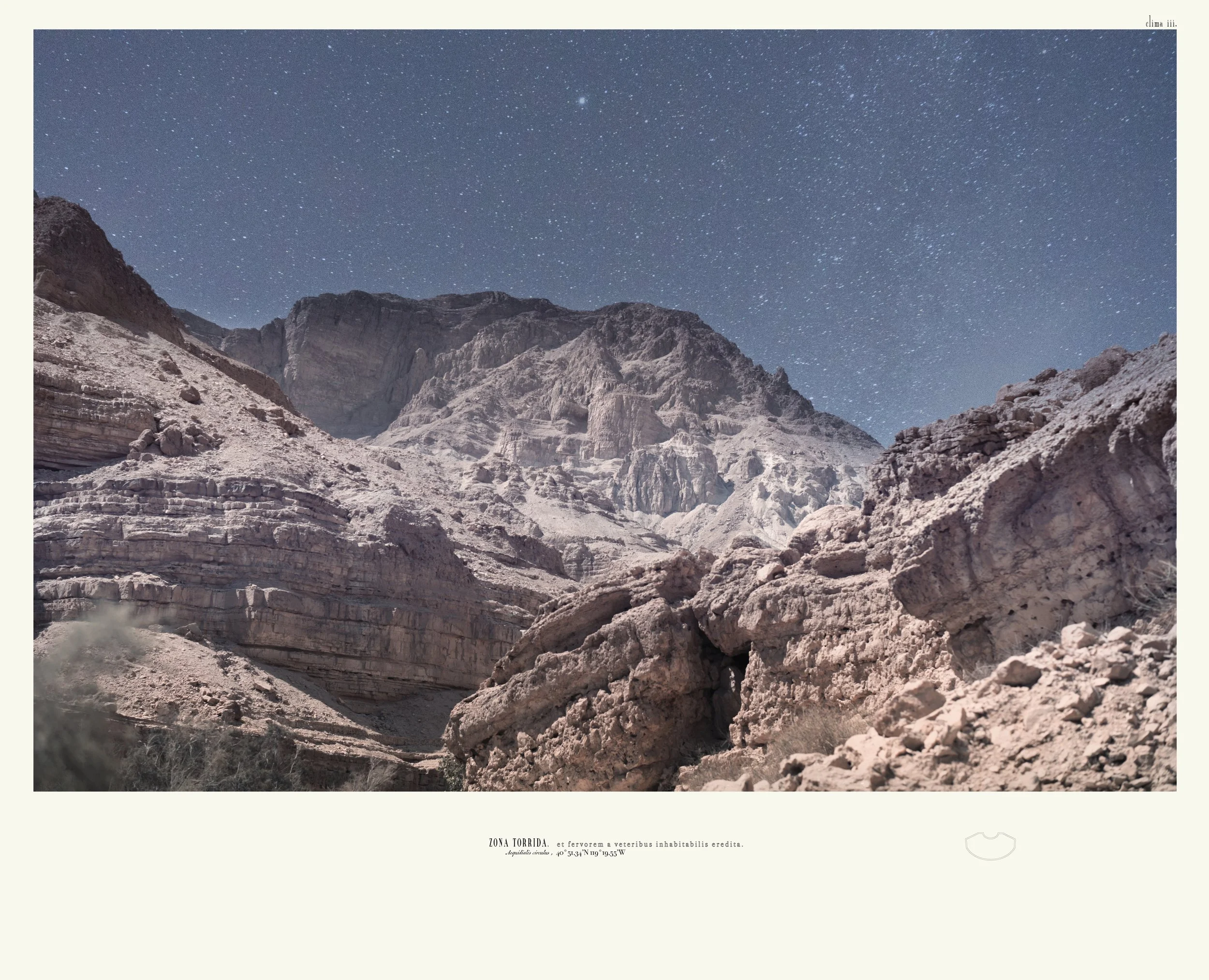
Zona Torrida, clima iii
right pigment print on Japanese Kozo with gold screenprint detailing, edition of 5, 2025.
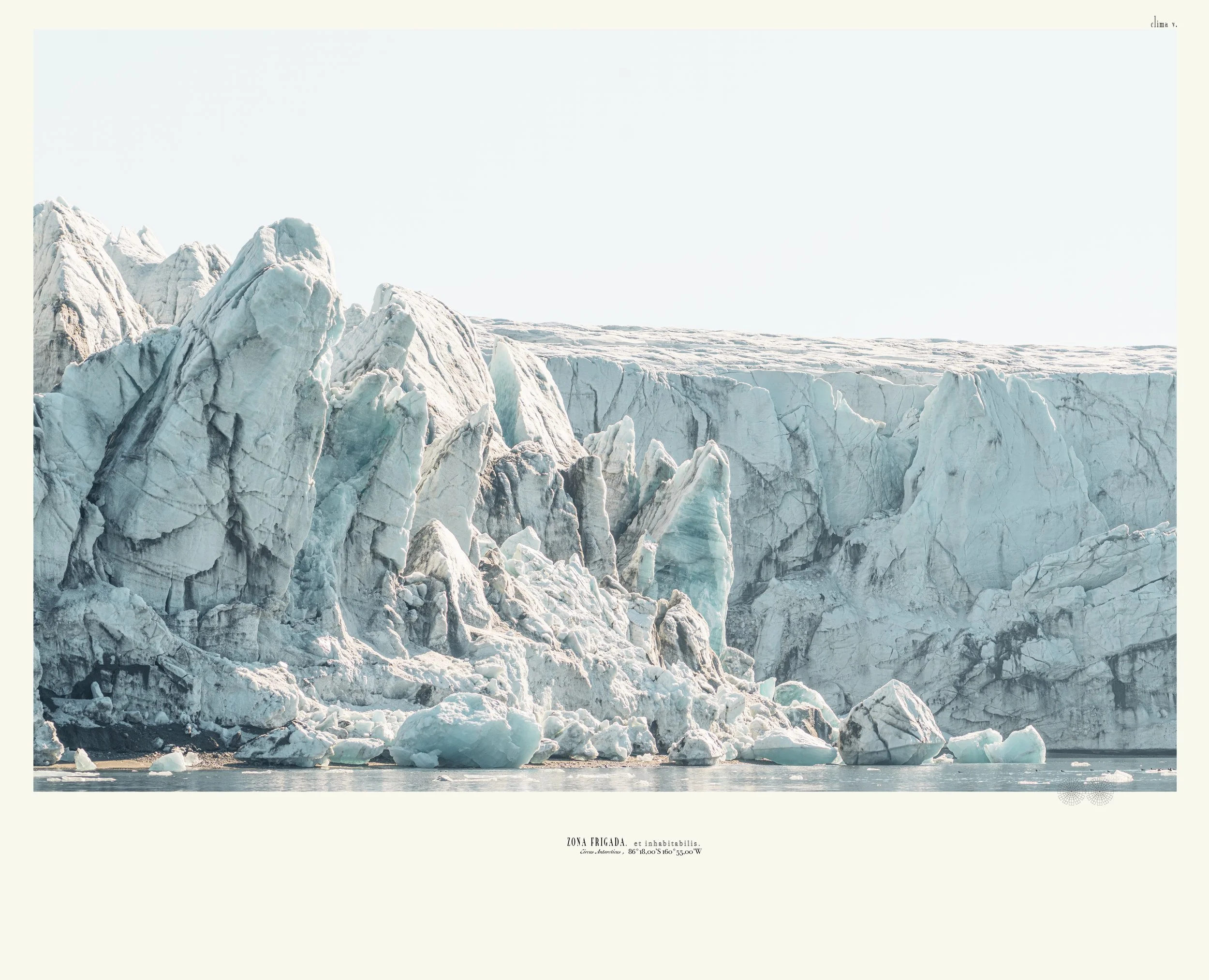
Zona Frigida, clima v
left pigment print on Japanese Kozo with gold screenprint detailing, edition of 5, 2025.
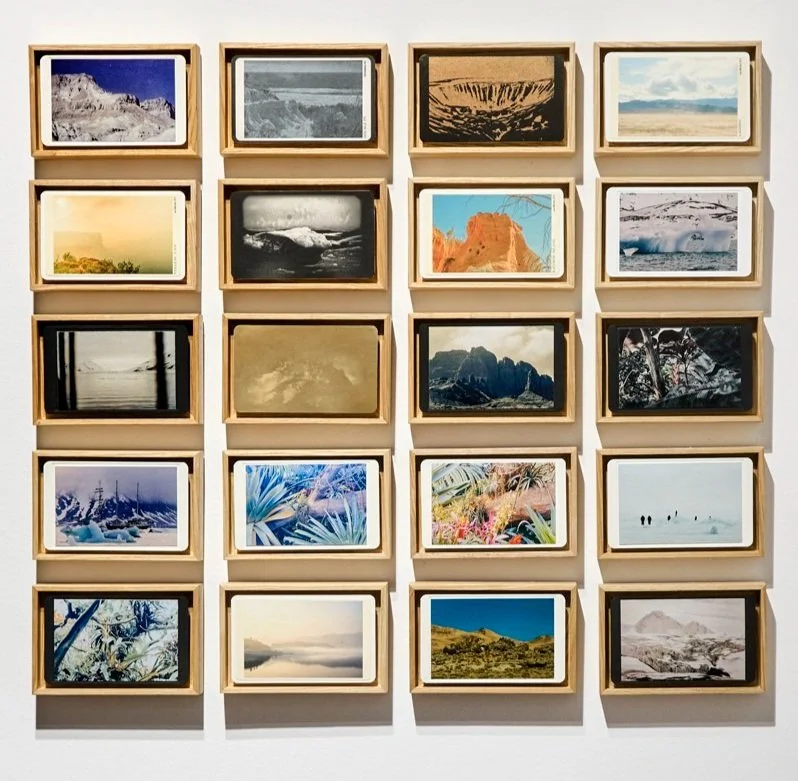
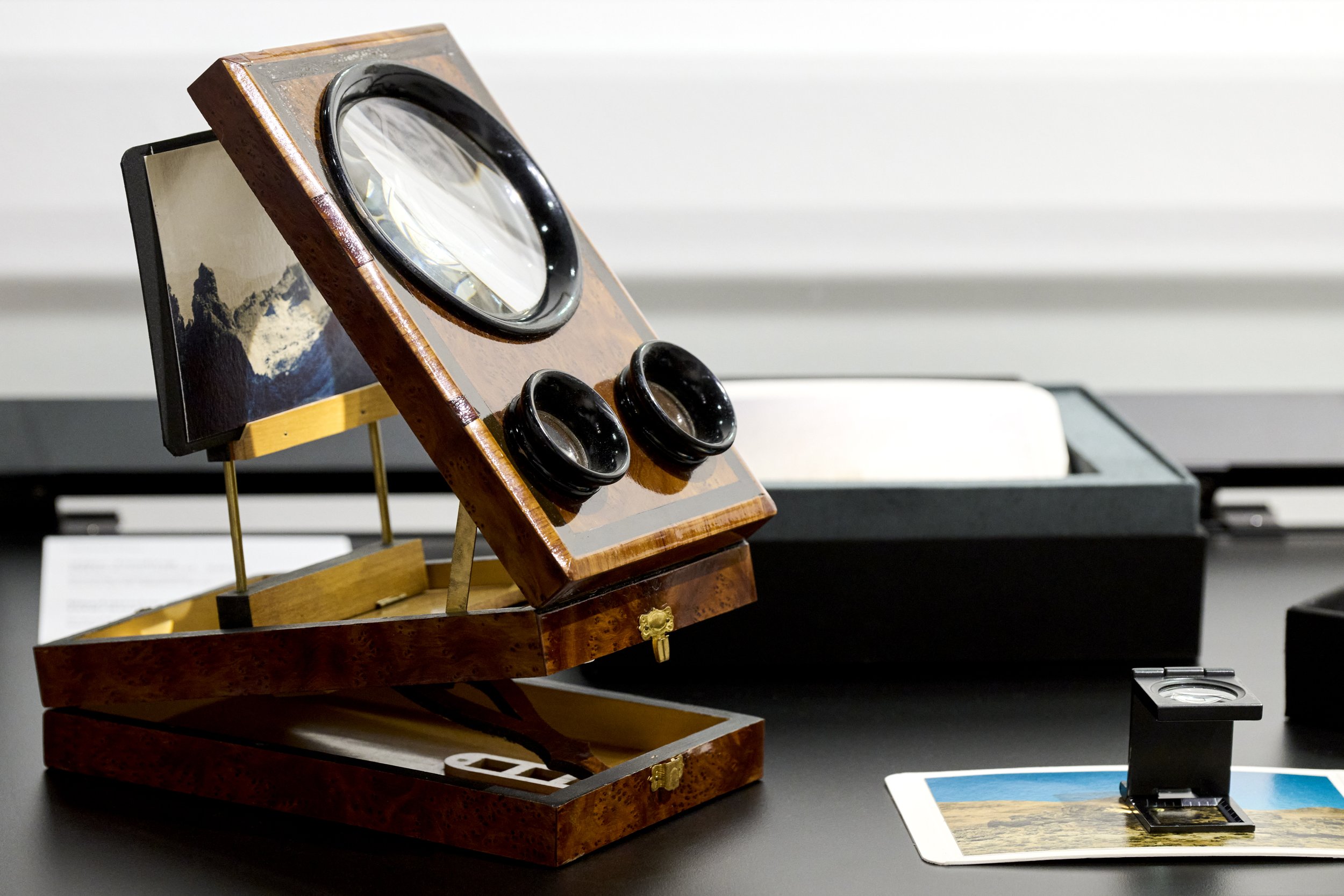
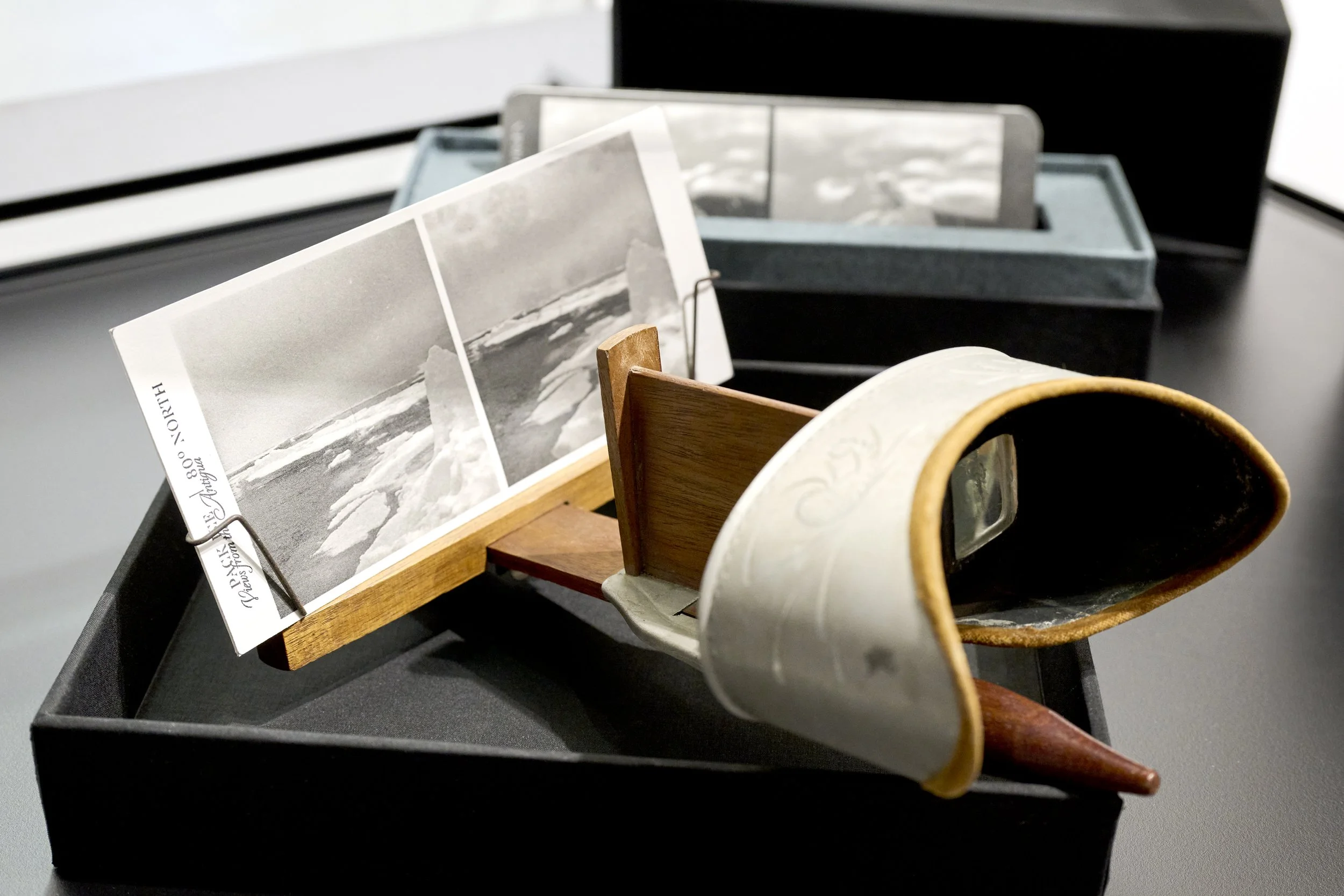
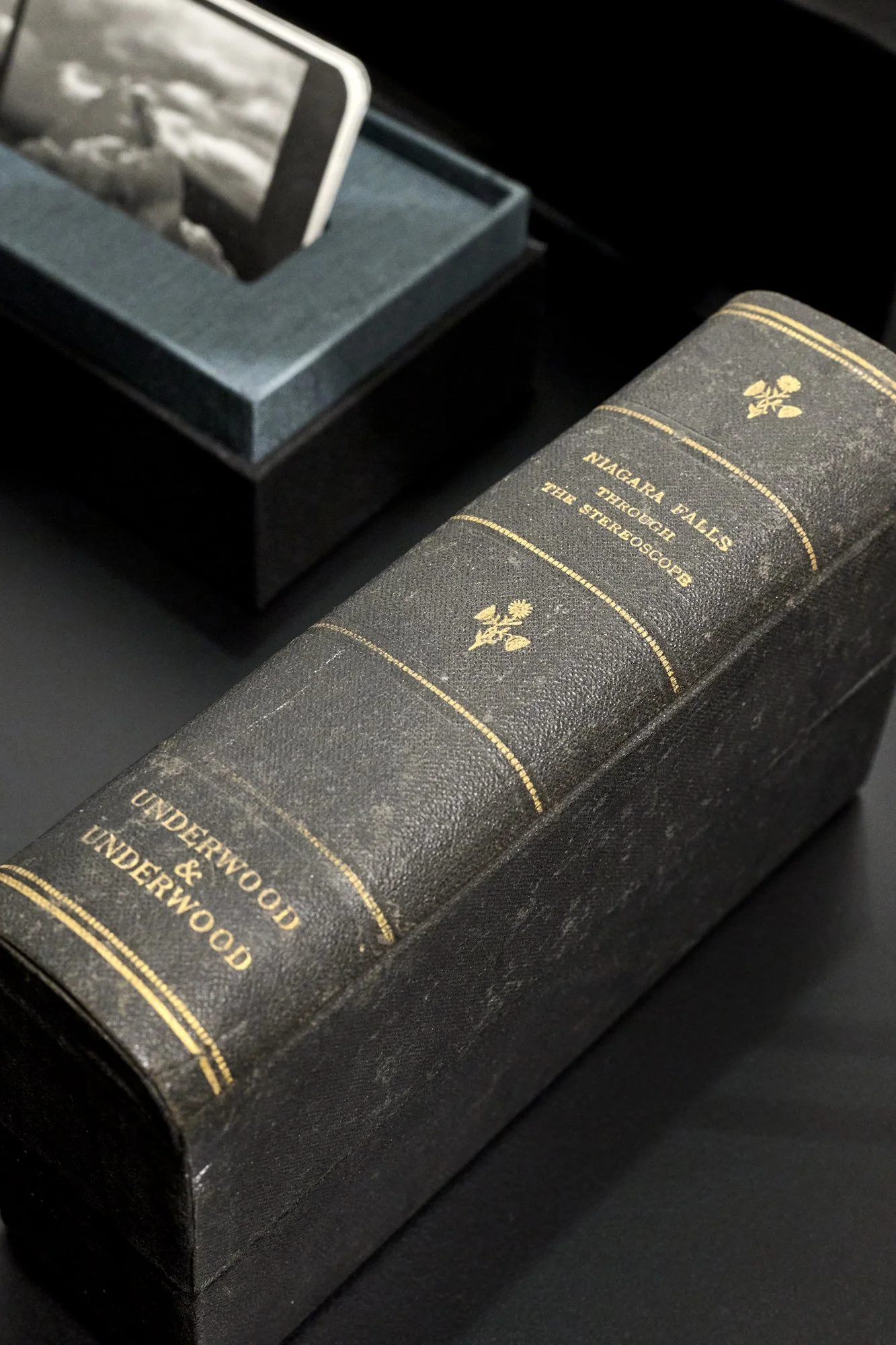
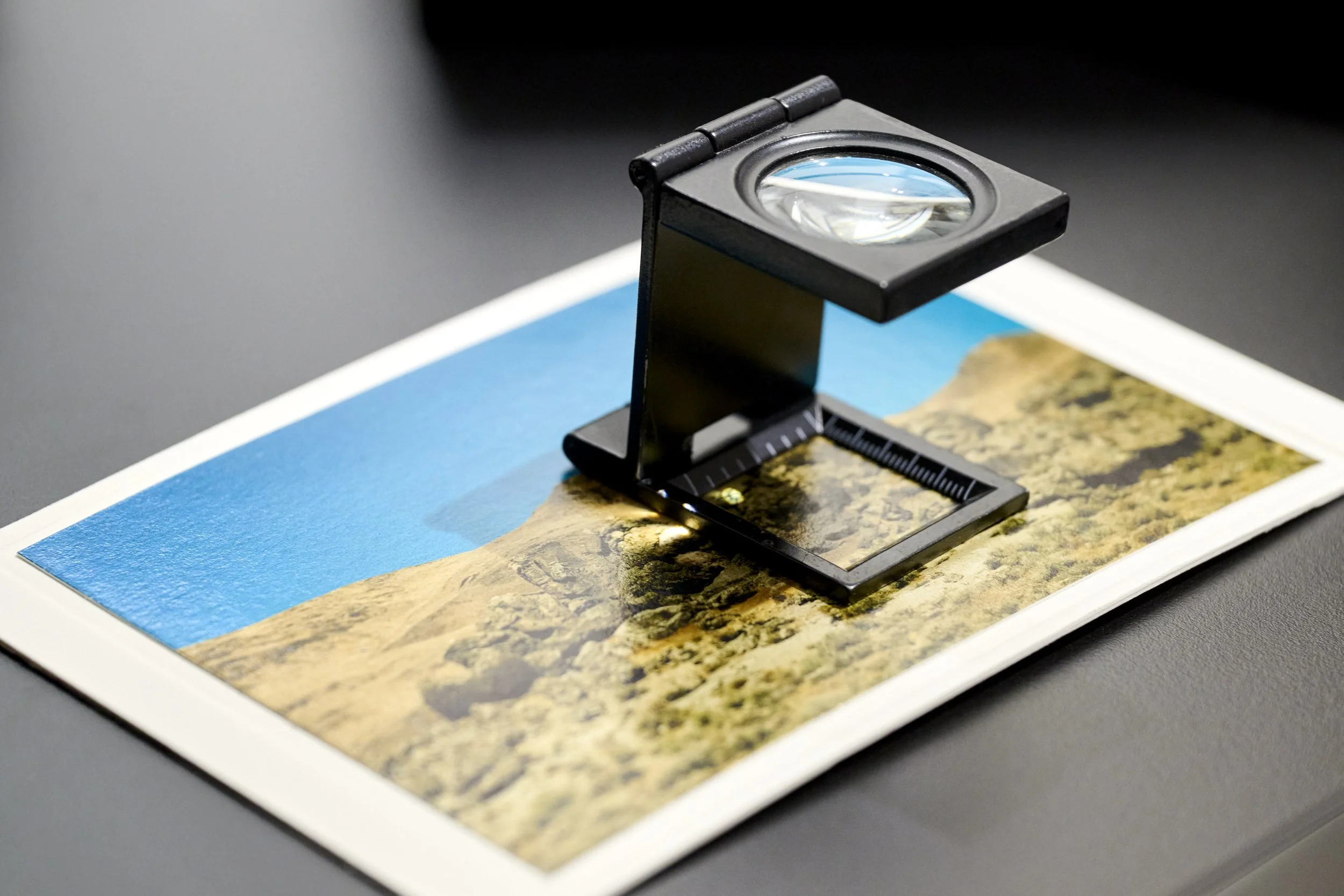
The exhibition ends with View Finding, a series of ‘cartes des visites’, that culminates in how expeditions brought back and communicated the places they had been to.
I wanted something that shifted from collecting or owning the world – something very colonial, to something that was “collectible,” and therefore personal.
These works cycle through many early photographic processes. Nearly a century of photographic processes helps the viewer walk through time as well as space. It also shows the democratisation of photography itself. This idea that cameras were used for expeditions, governments and those who could afford it, to being in every household. I wanted this transition to come across in the collection as the works shift through the different climes, as well as different eras of view finding and image capturing. I wonder about these perspectives and how we frame the world. What has changed? Is it because we can all take images? Is it time itself that creates this distinction? Or simply who is behind the lens?
Canada House, Trafalgar Square, London
Installation Photography by Kristof Jeney
March 12- April 30, 2025
Exhibited
Canada House Gallery, 2025
Royal Geographic Society, 2025
Press & Talks
FAD Magazine, Top 5 Exhibitions to See in London in April, 2025
BBC Radio London, Robert Elms, April 2025
The Londonist, Top Exhibitions to see in London in March 2025
Royal Geographical Society, Integrating Maps and Instruments in Art, April 2025